 GL
GL  ES
ES BELLA OTERO
Summary about her life
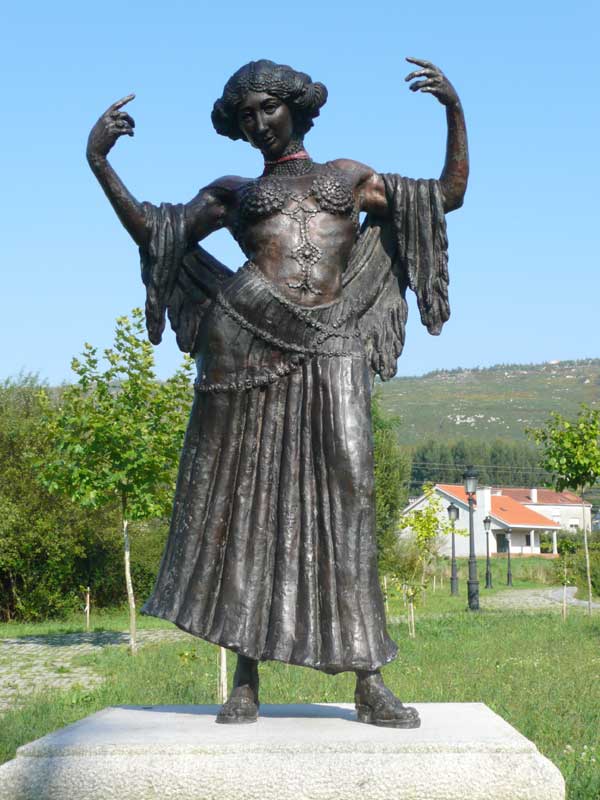
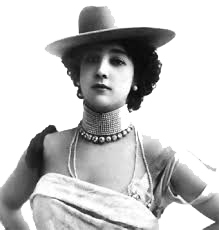
Born on November 4th, 1868 in Ponte Valga, Bella Otero never imagined she would become one of the most influential figures in the artistic world of the 19th and 20th centuries.
From a young age she showed artistic talent. At fourteen she worked as a dancer in Lisbon and later moved to Barcelona, performing at the Palacio de Cristal. There she met high society and artists such as Gaudí, who admired her beauty and even suggested she inspired some of his designs.
Her fame grew rapidly. She travelled to Marseille and then to Paris, the cultural capital of the time. She became the star of the Folies Bergère and performed at the Cirque d'Été. Writers such as Mérimée, Bizet, Meilhac and Halévy found inspiration in her.
Bella Otero became one of the most iconic figures of the Belle Époque. She lived through major historical events and was admired by artists like Toulouse-Lautrec, who painted her, and José Martí, who dedicated a poem to her.
She was a self‑taught artist, instinctive and expressive, capable of singing, acting and dancing. She performed Bizet’s Carmen and plays such as Nuit de Noël.
Her life inspired numerous biographies. After years of research, Marga do Val concluded that the true miracle of Bella Otero was her journey from Valga to Paris in the 19th century — something extraordinarily difficult at the time.
Without formal education she learned French, English and some German. She became one of the first Galician actresses and one of the earliest actresses in cinema history.
She died in Nice at the age of 96. Her life remains one of the most fascinating stories of the Belle Époque.
XESÚS FERRO COUSELO
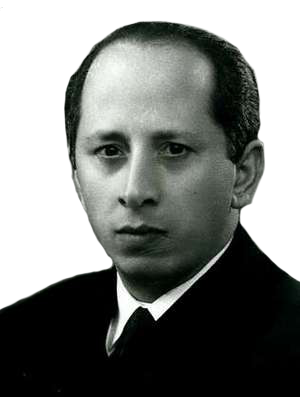
Xesús Ignacio Ferro Couselo was born in Santa Comba de Louro (Valga, Pontevedra) in 1906. He studied Philosophy and Literature, specialising in History, and later obtained his doctorate.
Deeply influenced by his uncle, archaeologist Xosé Couselo Bouzas, he developed a strong interest in prehistory and joined the Seminario de Estudos Galegos.
In 1931 he began teaching in Vigo and collaborated in the founding of the Partido Galeguista. Later, in Tui, he created the magazine “Tude” with the Álvarez Blázquez brothers.
During the Spanish Civil War he remained in Madrid, collaborating with several organisations and joining the Milicias Populares Galegas.
After the war he became director of the Museo Arqueolóxico Provincial de Ourense, where he carried out essential work in the preservation of Galician heritage.
He promoted important publications such as the Boletín del Museo Arqueológico Provincial and Boletín Auriense, and helped found the cultural magazine “Posío”.
In 1951 he became a member of the Real Academia Galega and supported the creation of the Día das Letras Galegas.
His most notable work is A vida e a fala dos devanceiros (1955), a key text in Galician philology.
Ferro Couselo died in 1975. The Día das Letras Galegas of 1996 was dedicated to him.